
 We use West System epoxys for their high strength and adhesive values.
It also fully protects the boat against water absorption and it can not develop the dreaded Osmosis.
We choose ATL Composite’s resin systems for their superior quality, reliability and value for money.
Having worked closely with the ATL Composites team and their products for many years, we know we can stand by their material solutions, and rely on great service should something unexpected happen.
 We prefer Colan brand cloths for their quality and low resin absorption, custom made for Schionning Marine at six (6) stitches per square inch for easy wet-out and rounding corners.
This may not seem important but when working with a material for an extended period of time, the small things make all the difference.
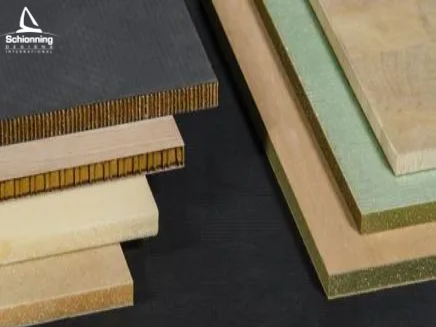
 The core choice is usually quite confusing. Cores have different capabilities and properties, and their benefits I feel are utilized fully in our catamaran designs. A quick look at their abilities:
- End-Grain Balsa – 150kg per cubic metre
- Superlight Balsa – 94kg per cubic metre
- Western Red Cedar – 360-380kg per cubic metre
- Foam – 80kg per cubic metre


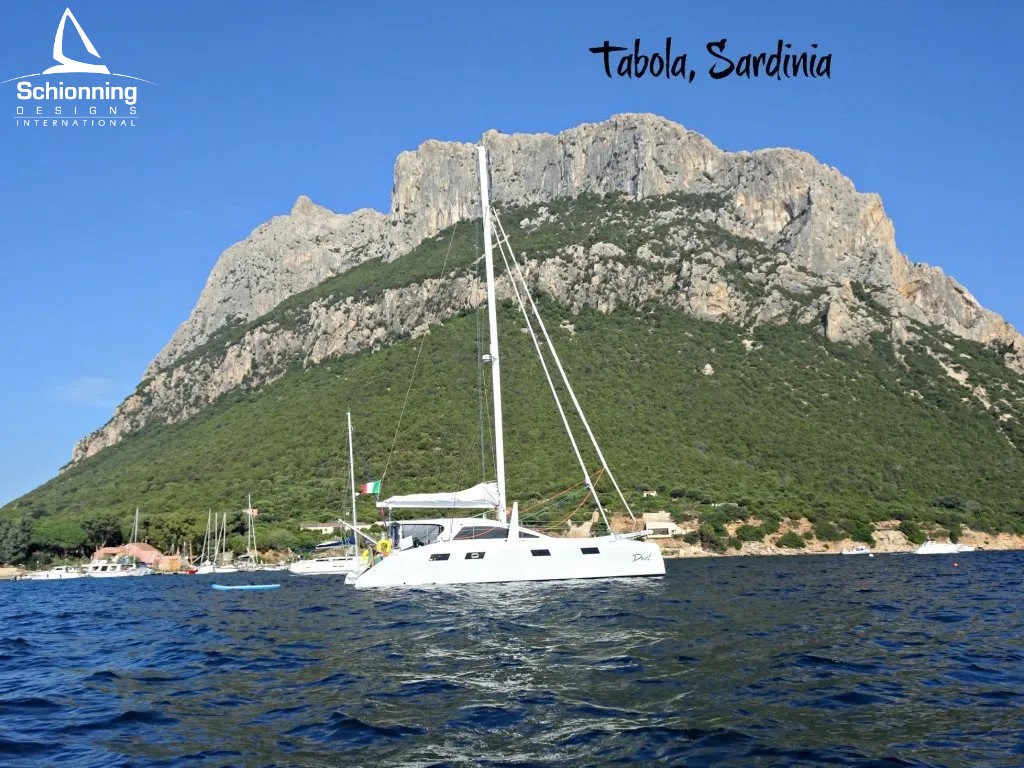
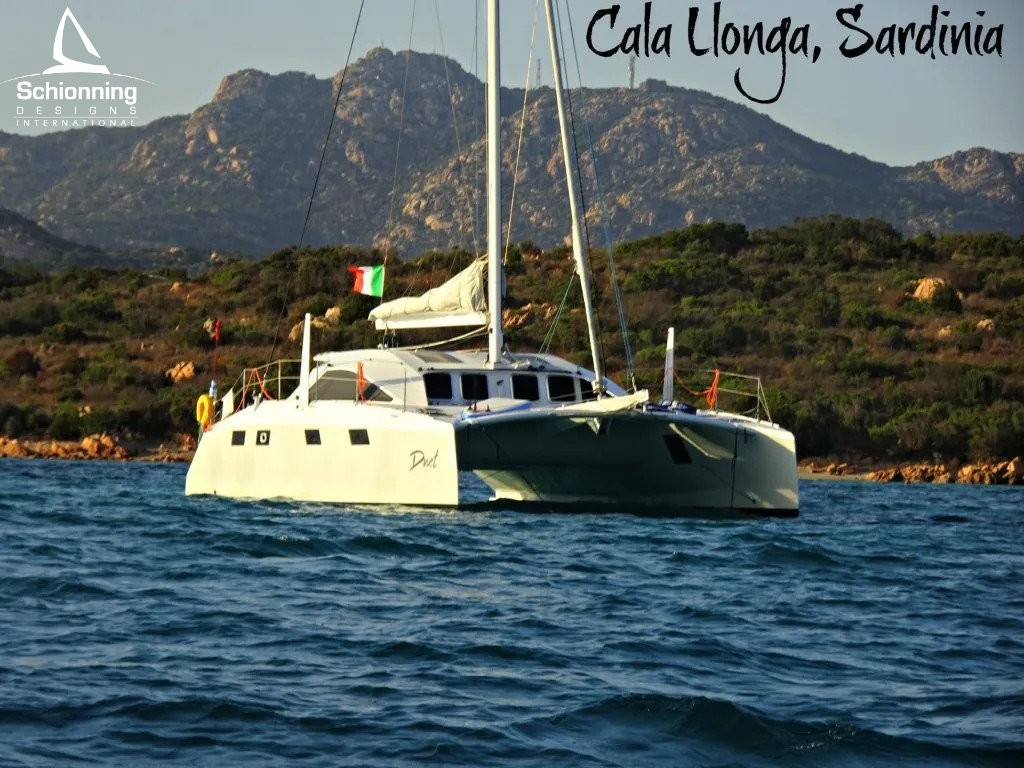
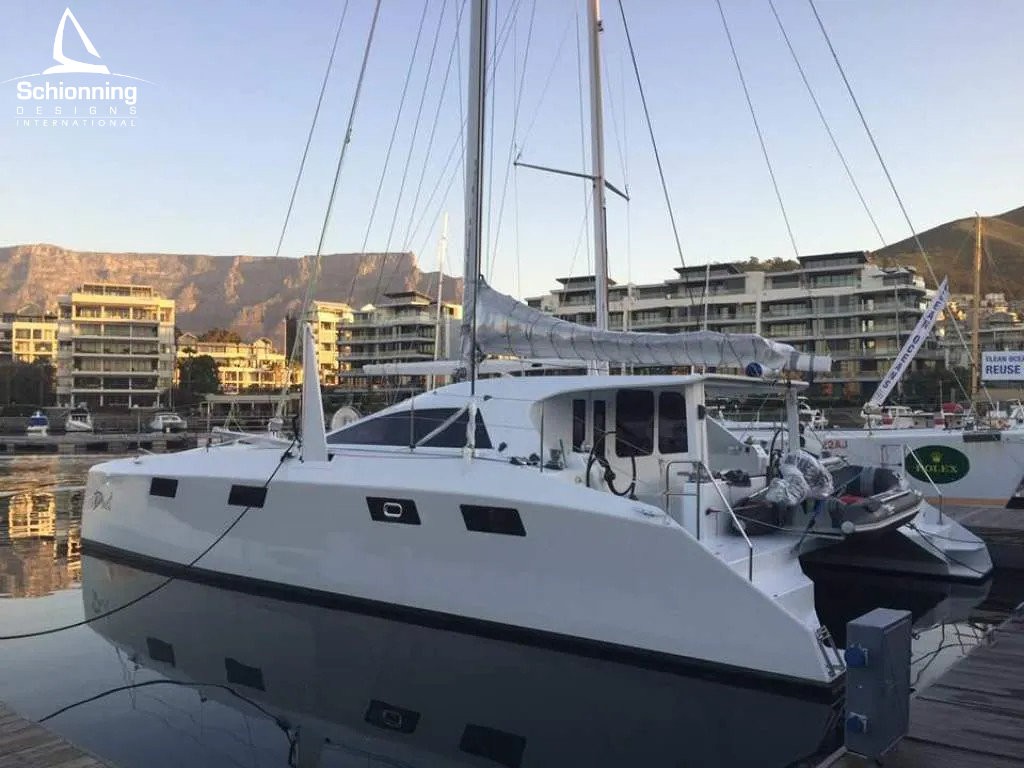
 Owner Geo Uhrich speaks about DUET’s impressive performance and his experiences while cruising in Spain.




 “We have just returned to New Zealand after spending 5 months away in Tonga and Fiji and thought I would let you know some things that have happened to us and our Cosmos 1160 called Division II. I knew that building a time proven design would have its advantages and I feel that the boat has outdone herself in performance and comfort. When we left Whangarei back in mid June for our first ever trip offshore we were unsure just how we would go. I have to say that the boat looked after us and we had no worries. We had one day on passage where it blew up to 50 knots with a constant 43/45 knots. With only the tiny storm jib up we surfed along quite happily and comfortably at 12 or so knots one hand steering with no worries. The very buoyant bows kept the decks almost dry. The rest of the passage was very uneventful and it was almost a shame to make land fall.
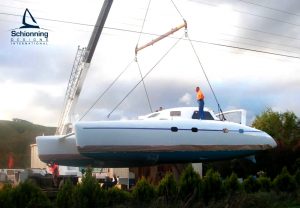 During our three month stay in Tonga our shallow draft allowed us several times to go and anchor closer to the beach or tucked closer in for shelter as others were more exposed to the elements. We had countless comments on the design and finish that we achieved during the build. During Regatta Vava’u we won the multi‐hull division beating the St Francis 50 quite easily due to our pointing ability and good speed, in fact passing and out pointing most of the half boats. What a great feeling!


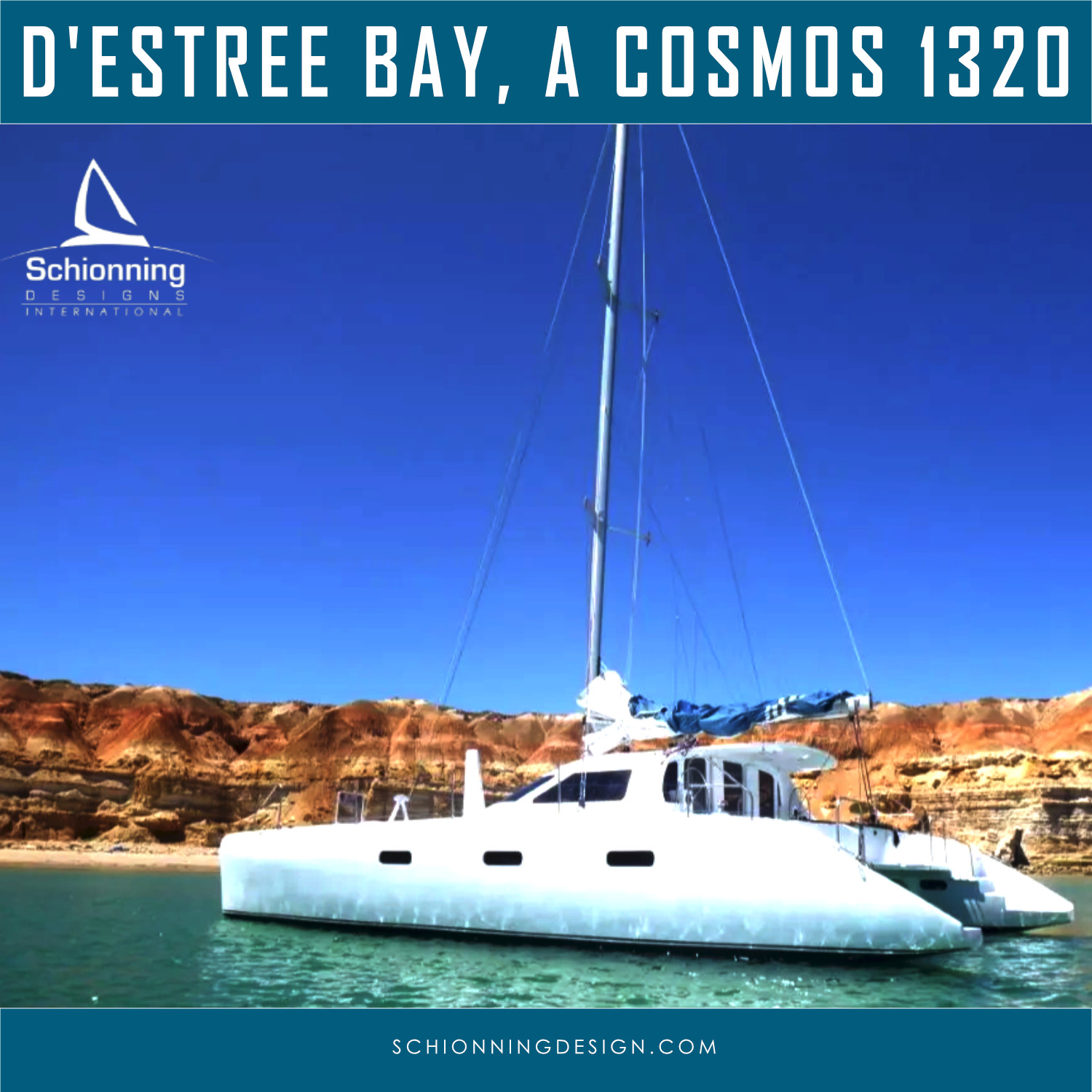

 “We left ‘D’Estree Bay’ in Broome last week and are now back in Hong Kong. A friend of ours is taking her to Borneo for us where we will pick her up again to continue the trip to Hong Kong in a few weeks. We sailed her to Perth from Adelaide in late February via Esperance and Albany and left her at the Freemantle Sailing Club for a month then, in April, took just under 3 weeks to sail her to Broome via the Abrolhos, Shark Bay, Ningaloo and the Montebellos. It’s the best sailing we have ever had. The boat goes like a rocket and is comfortable and easy to sail. She is everything we hoped she would be. Our top speed has been 24 knots but there have been plenty of days loafing along at 12 – 15 knots. In flat water we can get her to do 10.5 knots upwind – faster than our Volvo 60 which winds up at about 9.5 knots on the wind.
 We have sailed with two couples and there is a tonne of room and very easy watches for the overnight legs compared to our mono hull days. We are very fussy about weight and getting the sail off her promptly. The big flat head mainsail gives her overdrive! Being a light ship makes her a joy. Thanks so much for everything.


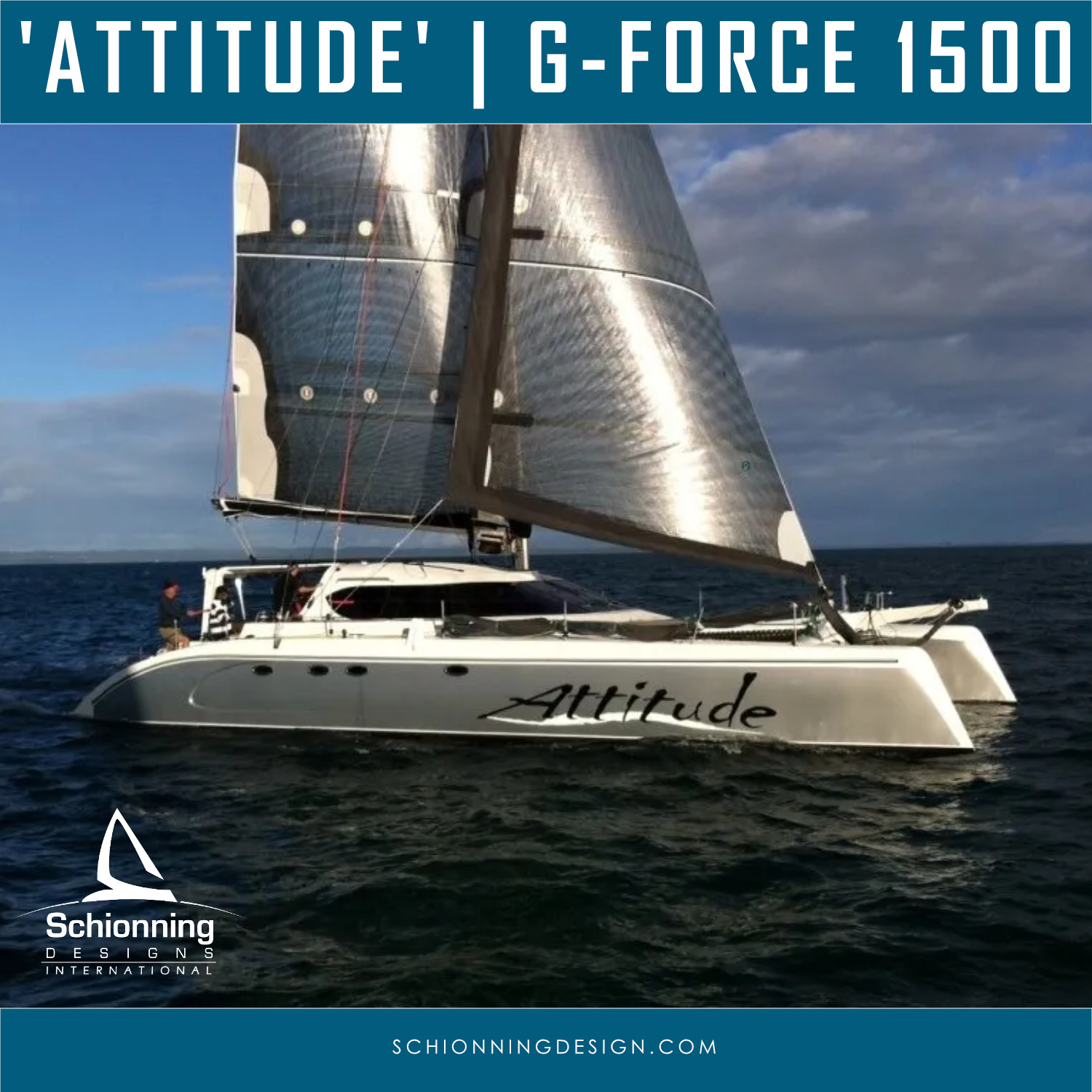

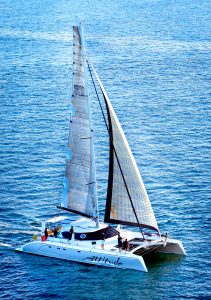
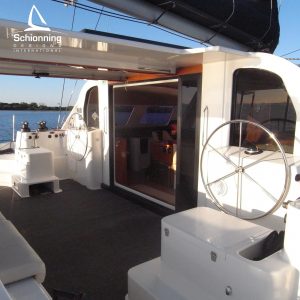 The delivery proved Attitude everything we set out to achieve, with our wish list dovetailing nicely into your fantastic design.I believe Attitude gives you guys the opportunity to promote the G‐Force range as a true performance cruiser, probably the best there is, not just a bare bones racer. And as you know better than most, when it comes to making these purchases, the saying “happy wife, happy life”, certainly makes that decision easier.”


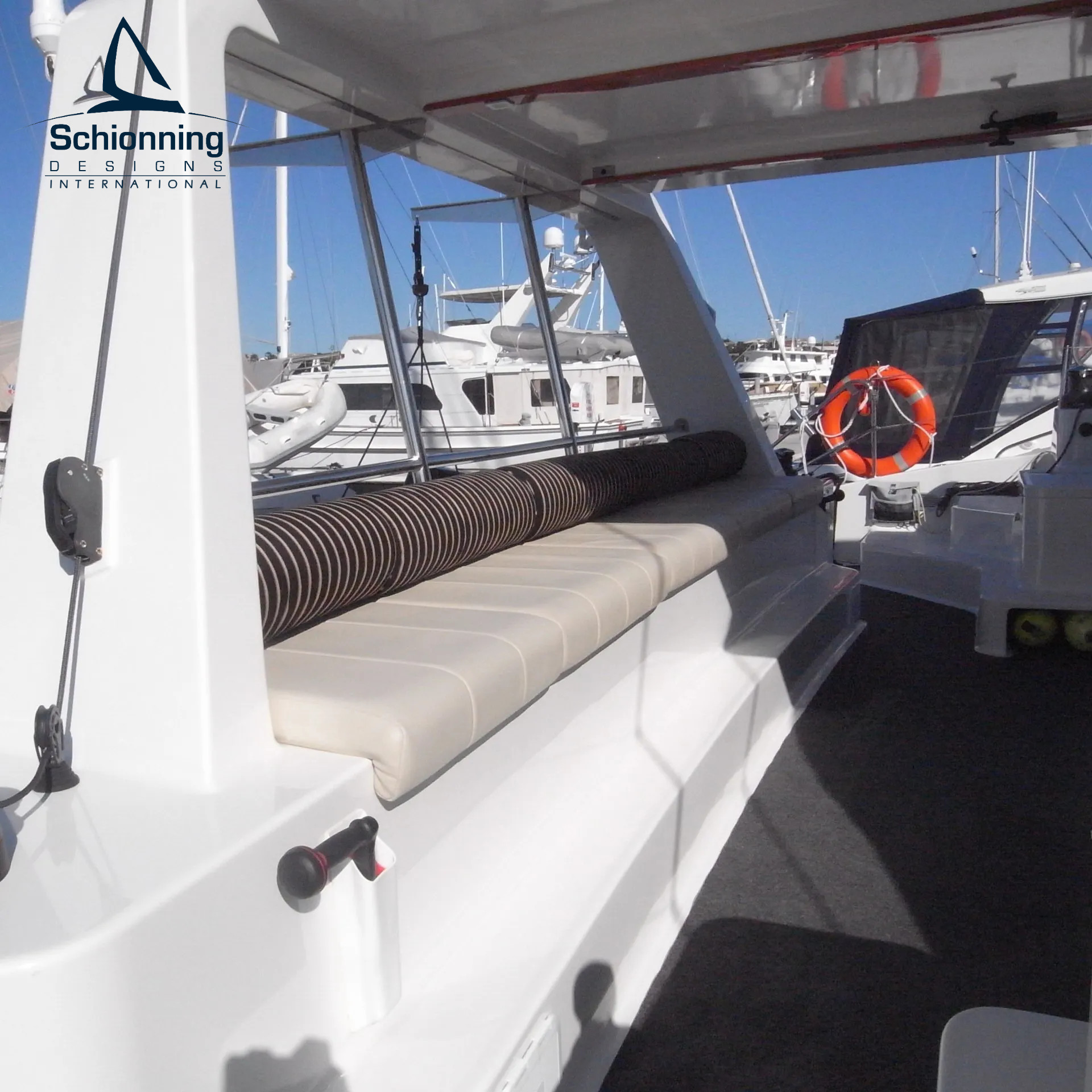


 “Jag is tracking very well can take your hand off the helm at any speed for minutes on end and she says on course. Did this one day in slight seas and 20 knots of wind for seven minutes at 16 knots boat speed and her course altered by 7 degrees. I am very much enjoying ‘JAG’ she is awesome. I am cruising at 16 knots using 24.4 litres per hour for both motors.”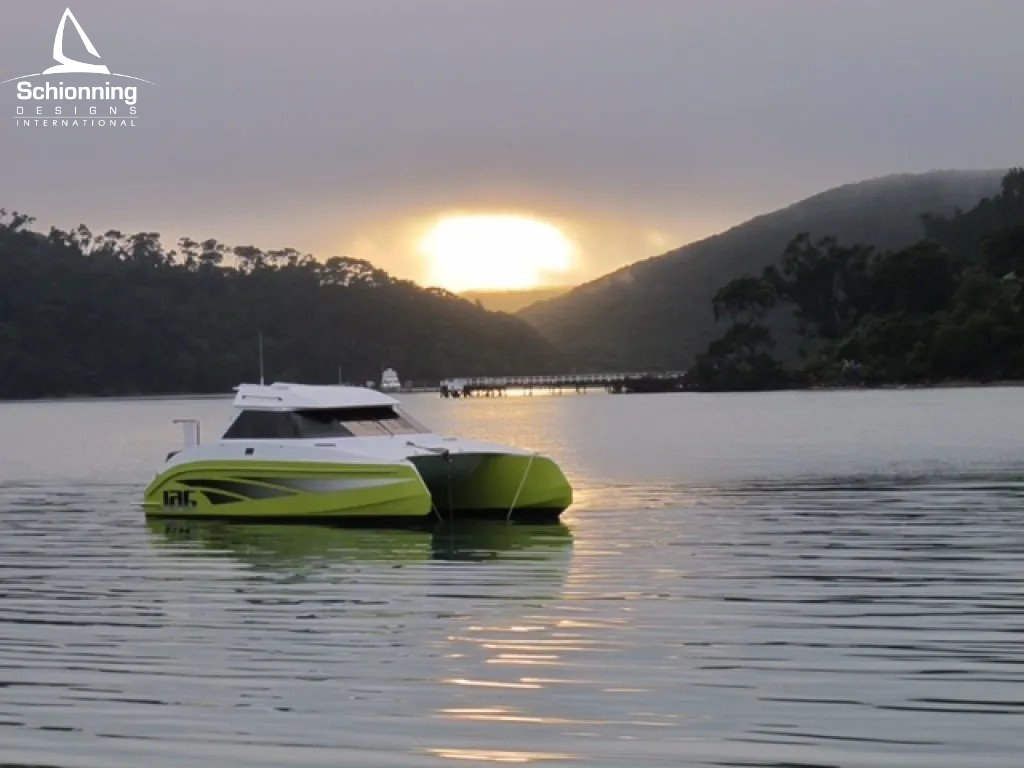


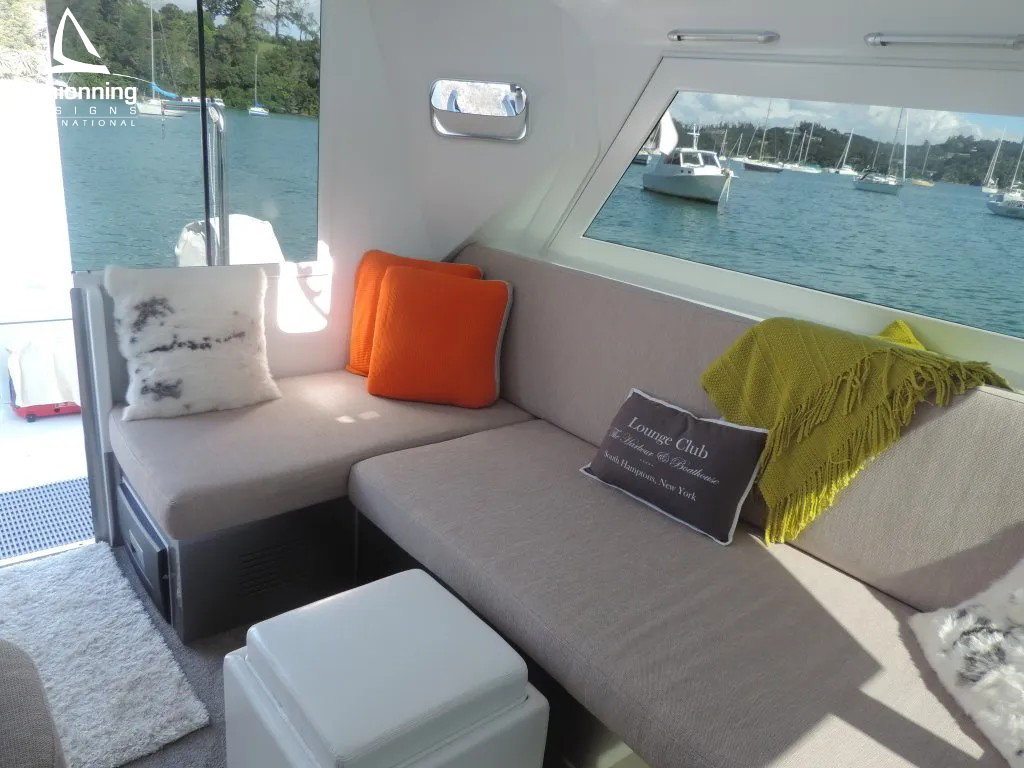
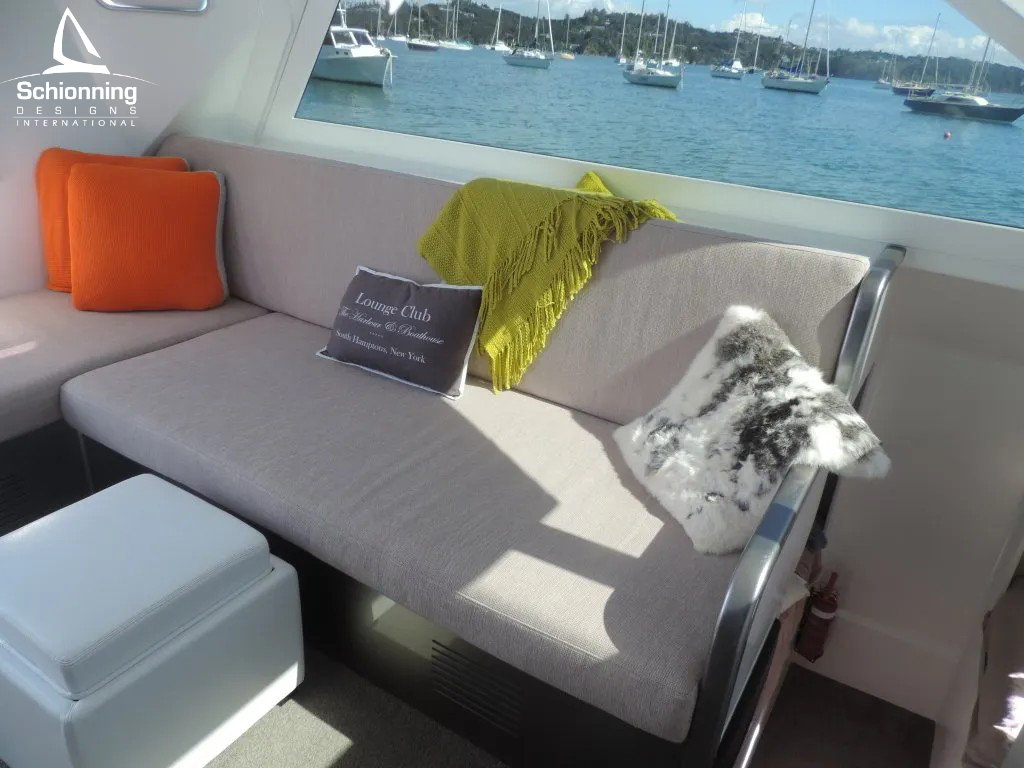
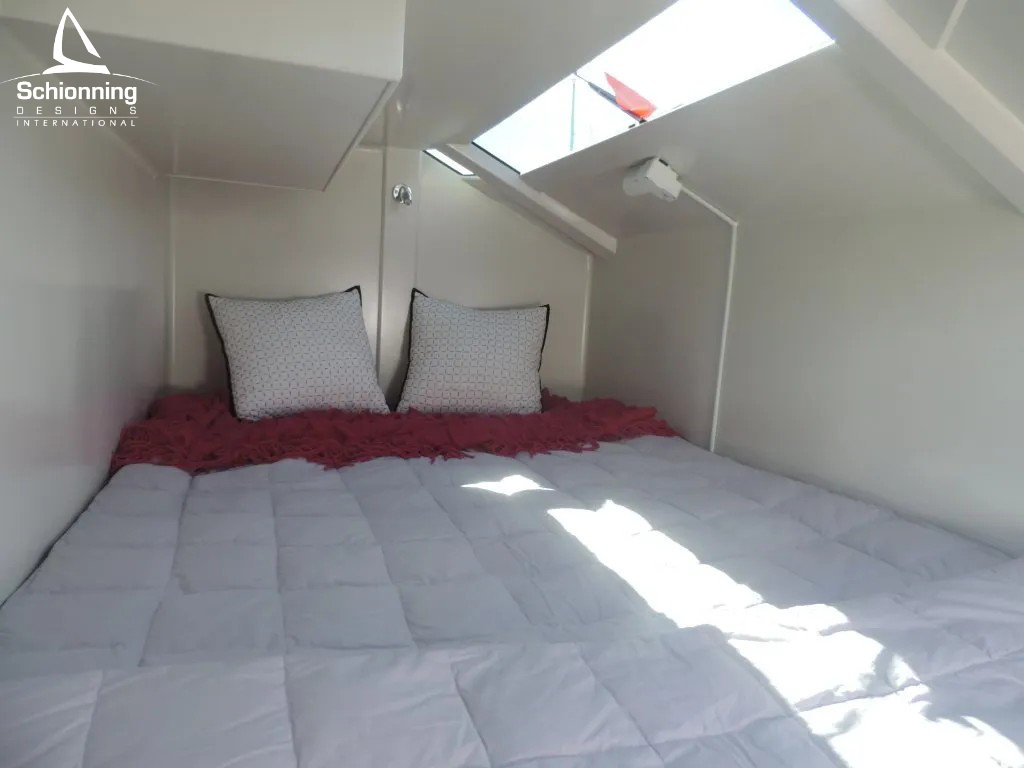

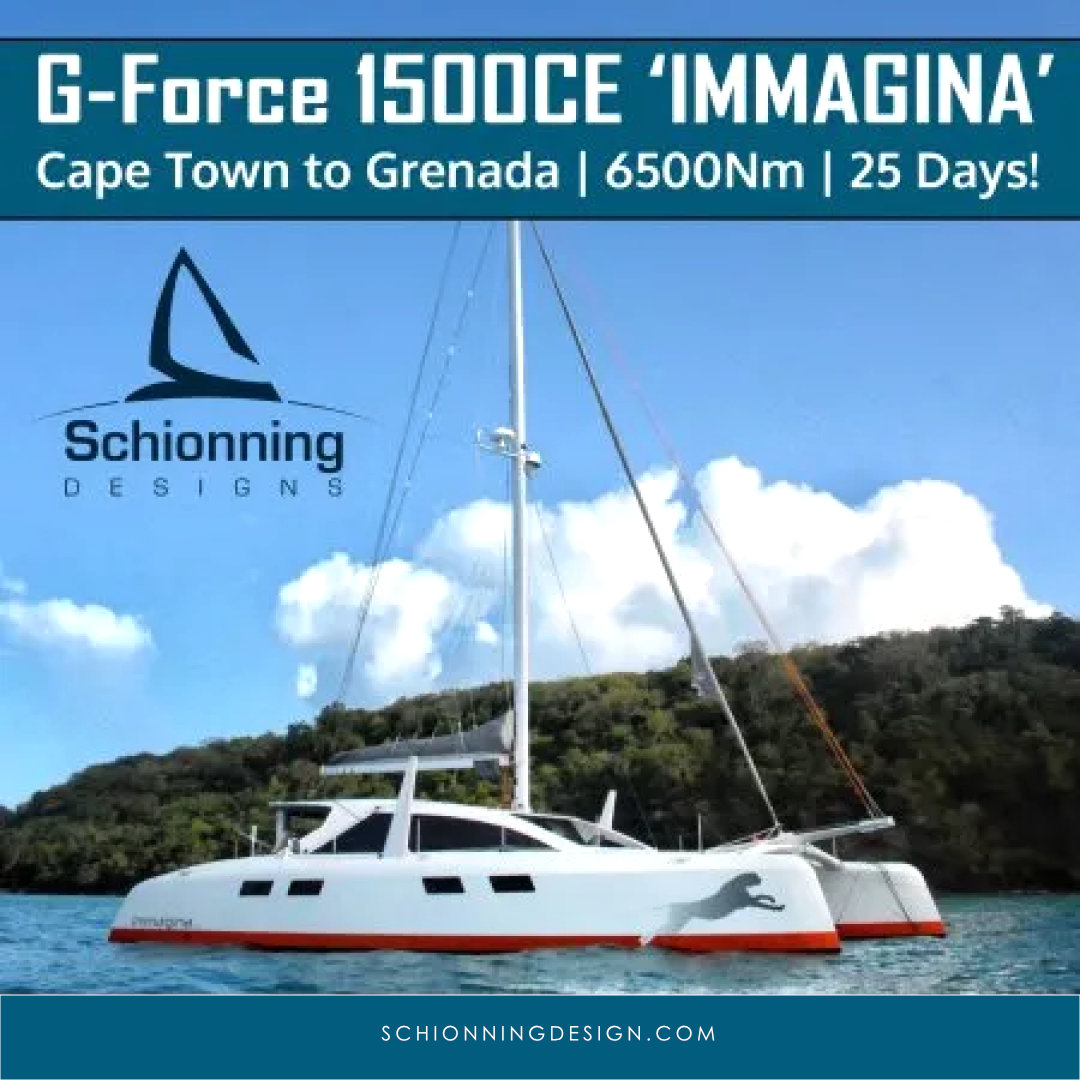

 I have sailed Immagina, a G-Force 1500C, from Cape Town to Grenada covering 6,500 Nm across the Atlantic. She sailed wonderfully throughout! We had south easterly winds that ranged from 10 Kts to 40 Kts, mostly 15 Kts to 25 Kts. With Code 0 hoisted, Immagina was often doing wind speeds. You have to keep in mind that we had provisions for four people for two months on board (we had one month spare provisioning as a safety factor), and this was not “dried” food but rather good, tasty Italian food. Most of the time we had the fresh water tank with 300 – 400 litres in it and 200 – 250 litres of diesel (generator back up). Then about 90 Kg for dinghy and outboard and many tools and spare parts. So we were not sailing light. Yet, Immagina behaved beyond my expectations. She was very stable and kept her course so well that I’d forget she was sailing under autopilot most of the time. Sailing at speeds of 15 kts was the norm and we were able to cook, shower, eat, sleep and do whatever at speeds between 10 and 20 kts. She is very stiff which translated in immediate accelerations with any wind increase or gusts and if I was resting in my cabin I would be able to tell her speed by the different sounds she was making through the water. Even in 40 kts winds, I never felt in danger or that she was not able to cope with the increasing seas and worsening of sea conditions. She is defiant and certain!
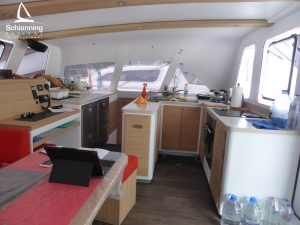 The particular layout with “U” galley and so forth is quite comfortable and useful for long passages and even she is quite light for her size nonetheless we still have three double cabins and three heads with two large showers, two freezers, two fridges, microwave, electric oven and induction cooktop which make an Ocean passage very pleasant and comfortable, yet you are crossing at double digit speeds at all times.


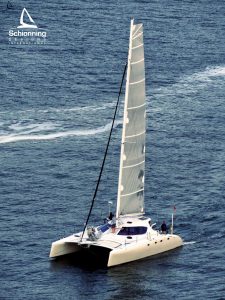 “I’m a long time catamaran racer. A Nacra 5.8 in the mid 80’s. A 40’ Crowther cat from 1997-2000. And in 2001, Afterburner, a 52’ x 30’ Tennant racing cat, heavily modified by the previous owners from a Bladerunner design. She had a great NZ racing record. We imported her and raced her for 16 years. It was quite the hoot, flying a hull into the high 20’s regularly. She had no center cabin, and would be described as wet and Spartan by most people. As an overpowered beast by others.
 I got to specify the fit out and rigging. I went for a bit taller carbon mast at 20m, as wind in southern California is generally lighter than the Cape of Good Hope. We got a deal on shipping her to the British Virgin Islands. My friends and I spent most of 2015 bringing her back to Sothern California in a series of legs. It was quite the adventure with lots of boat repairs in exotic locations. Her fundamentals are sound. The design is great. Her construction is a bullet proof work of art. She sails great! We have pushed her hard without drama. (Who doesn’t have some issues with plumbing, electronics, fuel, and engines on a new boat?)
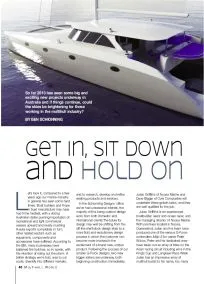 An article on the G-Force’s under construction and the development of a new custom design. Published in issue #120 of Multihull World Magazine.
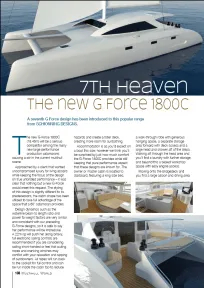 A write-up on the G-Force 1800C, the latest and largest G-Force from Schionning Designs. Published in issue #121 of Multihull World Magazine.
 A short design write-up on the new Legend 60 design. Published in issue #121 of Multihull World Magazine.
 A design review in Multihull World magazine for the brand new Arrow 1200 design. This design is 100% flat panel construction and is a great budget option for those wanting to cruise the world.
 An article from Multihull World Magazine about the introduction of the new G-Force Cruise range, that keep with the performance of their thoroughbred sisters but can carry those cruising extras!
 A launching story from Multihull World Magazine about the Wilderness 1030 “Time Lord” that was launched in 2013.


