Posted on

Recommended Equipment

Catamaran Kit Materials. What do I receive? Schionning Designs supply a list of the Kit Materials you will receive to start the process.

Recommended Equipment

Quality suppliers & manufacturers

The Schionning team have a lot of contact with equipment suppliers and manufacturers, and hear feedback on certain brands or systems from our many customers. There are many Schionnings cruising the world and testing products longevity and the customer service offered by the manufacturer.

Posted on

Kit Materials Contents

Catamaran Kit Materials. What do I receive? Schionning Designs supply a list of the Kit Materials you will receive to start the process.

kit materials' Contents

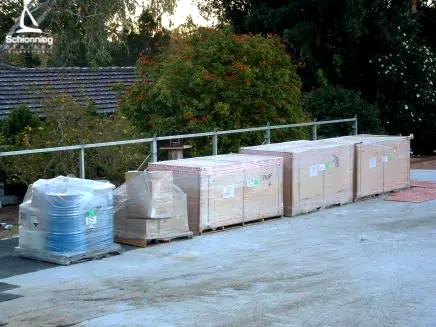
So if you order a Schionning kit, what exactly is going to arrive? See an overview of the materials you will receive, and what each is used for during the build process. Fibreglass cloth or tapes? Microspheres, Microballoons or Microfibers? Take a closer look and you can answer these questions.

Our Schionning Kits are a no nonsense, common-sense approach to building a boat. We offer great service, fast delivery and access to anything you could need for your boat straight from the supplier to your door. Our construction plans and kits are sold with 100% professional boatbuilder support via phone and email, any time you're unsure or just need a second opinion, we're here.

Our kits contain all of your basic materials to build your boat to a faired shell stage, ready for painting and fit-out. We have sail-away costing estimates available for all of our standard designs, and this will give you an accurate idea of the overall cost of your project. This costing varies depending on your level of finish, as you can imagine different options vary greatly in price.

Below is a quick glance at what your Schionning Kit will include and what each item is primarily used for, we hope this is helpful and if you should require more detailed information please don’t hesitate to contact our office.

What do I actually receive?

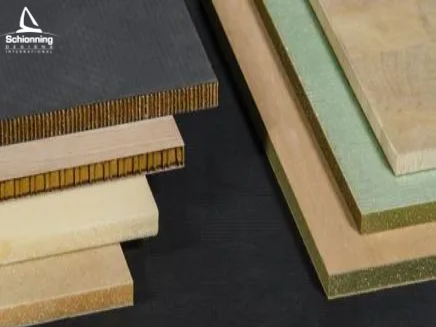
Superlight Balsa - End-Grain Balsa - Foam - Paper Honeycomb - Western Red Cedar - SDI - End-Grain Balsa - 150kg per cubic metre Paper Honeycomb - 50kg per cubic metre Superlight Balsa - 94kg per cubic metre Western Red Cedar - 360-380kg per cubic metre - Foam

DUFLEX PRE-LAMINATED PANELS

DuFlex pre-laminated panels are the main and most important material used in our kits, predominantly in the flat panel designs, however they are used in Strip-planked designs also, though to a lesser extent. These panels are 2400mm x 1200mm and are CNC routed to speed up build time on our Wildernes X Series, as well as some of our power designs. For internal furniture, a paper honeycomb core is used instead of the end-grain balsa wood core that is used for main structural areas. The use of this is purely to save weight in the shell and therefore produce a faster, more responsive catamaran.

Schionning Catamaran Kit Materials contain Kinetix Laminating Resin & Hardener Kinetix Laminating resin is used on all of our designs and is used for laminating the strip-planked areas, so round-bilge designs will use it more often whereas our flat panel designs not as much.

KINETIX LAMINATING RESIN & HARDENER

Kinetix Laminating resin is used on all of our designs and is used for laminating the strip-planked areas, so round-bilge designs will use it more often whereas our flat panel designs not as much.
 
The reason we use Kinetix is that it has a much higher heat resistance than West System epoxies and for larger surface areas that will be in direct sunlight it is the safest solution.
 
The Kinetix resins are mixed by weight/volume at a mixing ratio of 4:1.
Resin Choices for Catamaran Kit Building by Schionning Designs SDI - We choose ATL Composite's resin systems for their superior quality, reliability and value for money. West System Epoxy Resins

WEST SYSTEM EPOXY RESINS

The West System range is the most widely used composite epoxy system in Australia and the World when it comes to marine applications. Trusted and recommended across the globe, these products are used for most of the gluing applications involved in your build. Pumps are sold for mixing the resin and hardeners, at a ratio of 5:1. The pumps ensure that 1:1 pump ratio will equate to exactly 5:1 resin to hardener. West System hardeners come in a variety of drying speeds from Fast to Slow and everything in between. This is important when certain jobs require more or less drying time, or when working in different environments and temperatures. The West System fillers are Microlight, Microfibres and Microspheres and these are used for either fairing, gluing, filling or coving in corners etc. These powders are mixed with the resin and hardener to form a putty of desired viscosity.
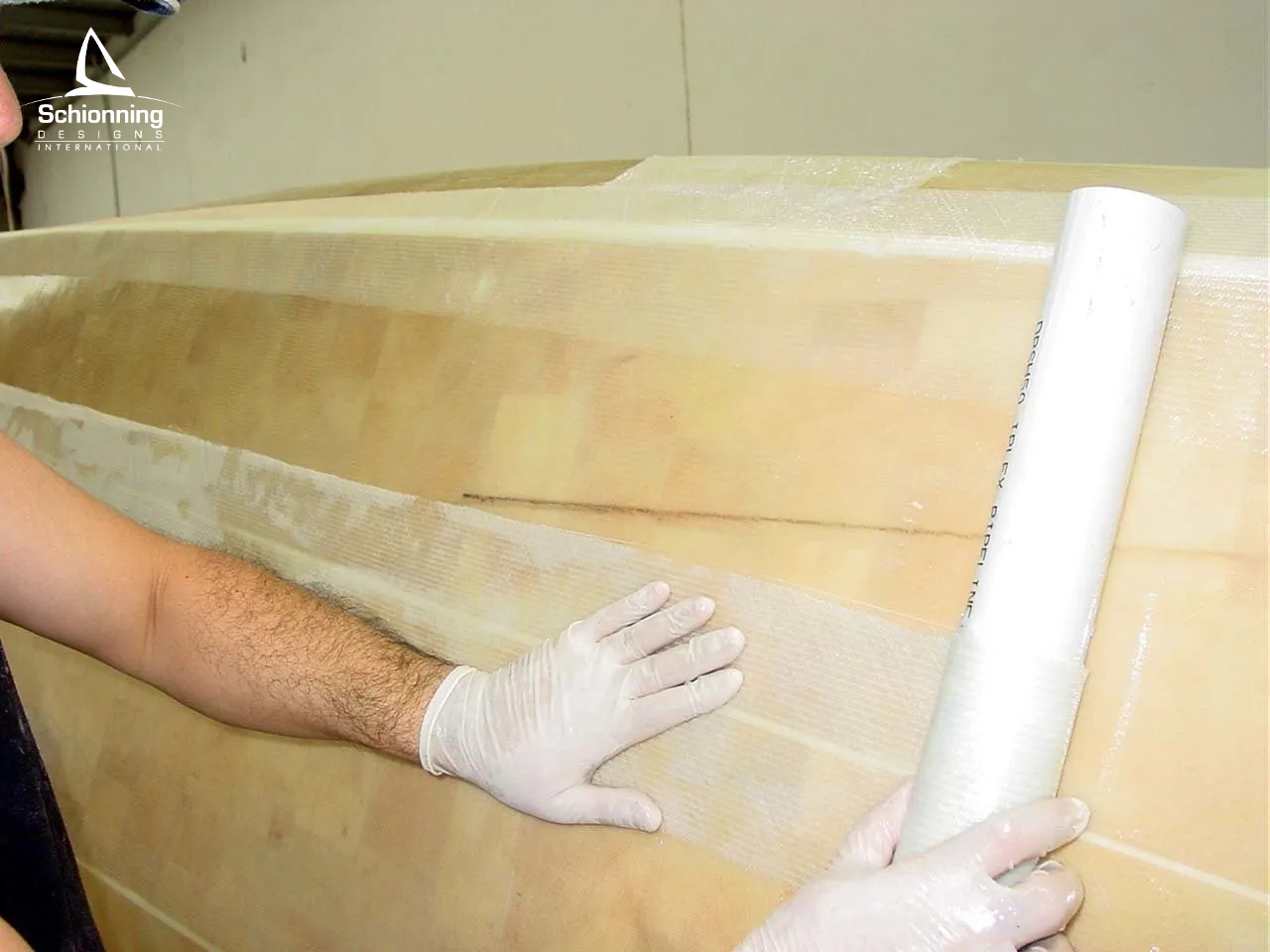
Fibreglass Tapes (Double Bias) These double bias fibreglass tape rolls are used for the joining of panels in our flat panel designs, or in round-bilge designs to a lesser extent. Anywhere that DuFlex panels need to be joined, tapes will be used. The smaller rolls come in different widths for ease of use and to save time on cutting larger rolls of cloth.

FIBREGLASS TAPES (DOUBLE BIAS)

These double bias fibreglass tape rolls are used for the joining of panels in our flat panel designs, or in round-bilge designs to a lesser extent.
 
Anywhere that DuFlex panels need to be joined, tapes will be used.
 
The smaller rolls come in different widths for ease of use and to save time on cutting larger rolls of cloth.
 
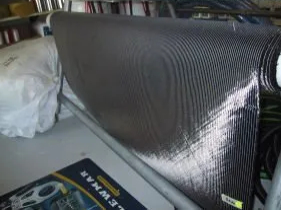
Schionning Designs Catamaran Kit Materials Carbon Fibre Cloth Carbon fibre is used on a number of our designs and can be incorporated into any design to save on weight and increase the performance capabilities. Carbon comes in unidrectional and double bias, however is much more expensive than standard fibreglass (as one might expect). It is very similar to work with, however the resin choice may change when using carbon.

CARBON FIBRE CLOTH

Carbon fibre is used on a number of our Schionning Catamaran Designs and can be incorporated into any design to save on weight and increase the performance capabilities.
 
Carbon comes in unidrectional and double bias, however is much more expensive than standard fibreglass (as one might expect). It is very similar to work with, however the resin choice may change when using carbon.
 
Schionning Designs Catamaran Design Kit Materials Fibreglass Cloth Fibreglass cloth is the strength and stiffness that holds your boat together, this is used in most areas for strength and is used in a variety of techniques depending on the area or job that is being performed. Fibreglass is one of the most widely used materials for low weight and high strength properties.

FIBREGLASS CLOTH

Fibreglass cloth is the strength and stiffness that holds your boat together, this is used in most areas for strength and is used in a variety of techniques depending on the area or job that is being performed.
 
Fibreglass is one of the most widely used materials for low weight and high strength properties.


Posted on

The Kit Process

Catamaran Kit Materials. What do I receive? Schionning Designs supply a list of the Kit Materials you will receive to start the process.

The Kit Process

Building your own boat can be a daunting prospect, however to demonstrate each step in the kit assembly process, we've created this guide for you to study. As you can see our kits are the ultimate in building efficiency and have been streamlined over 30+ years to ensure that you're on the water faster and with less effort.

How does it all go together?

STEP 1

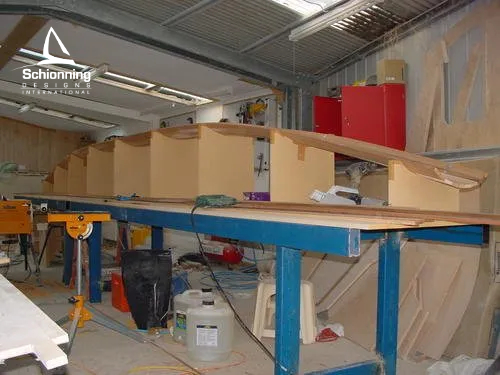
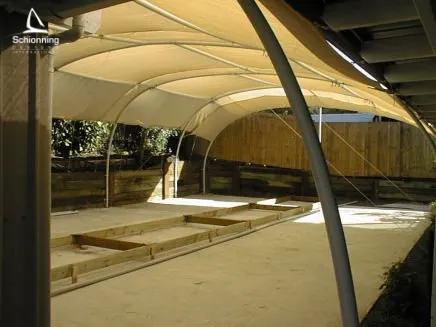
The first step to building your dream catamaran begins with a strongback – this is a square frame used to position the temporary frames that will be used to form the hull shape. This frame will be set up and must be square and accurate, a string or laser level can be used to achieve this.

STEP 2

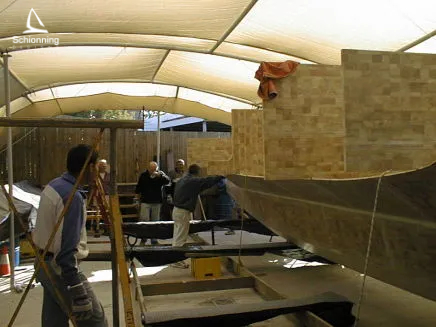
Once you have released the pre-cut frame panels, they are erected along the strongback in sequence. The hull panels will be laid over this framework to form our hull shape.

STEP 3

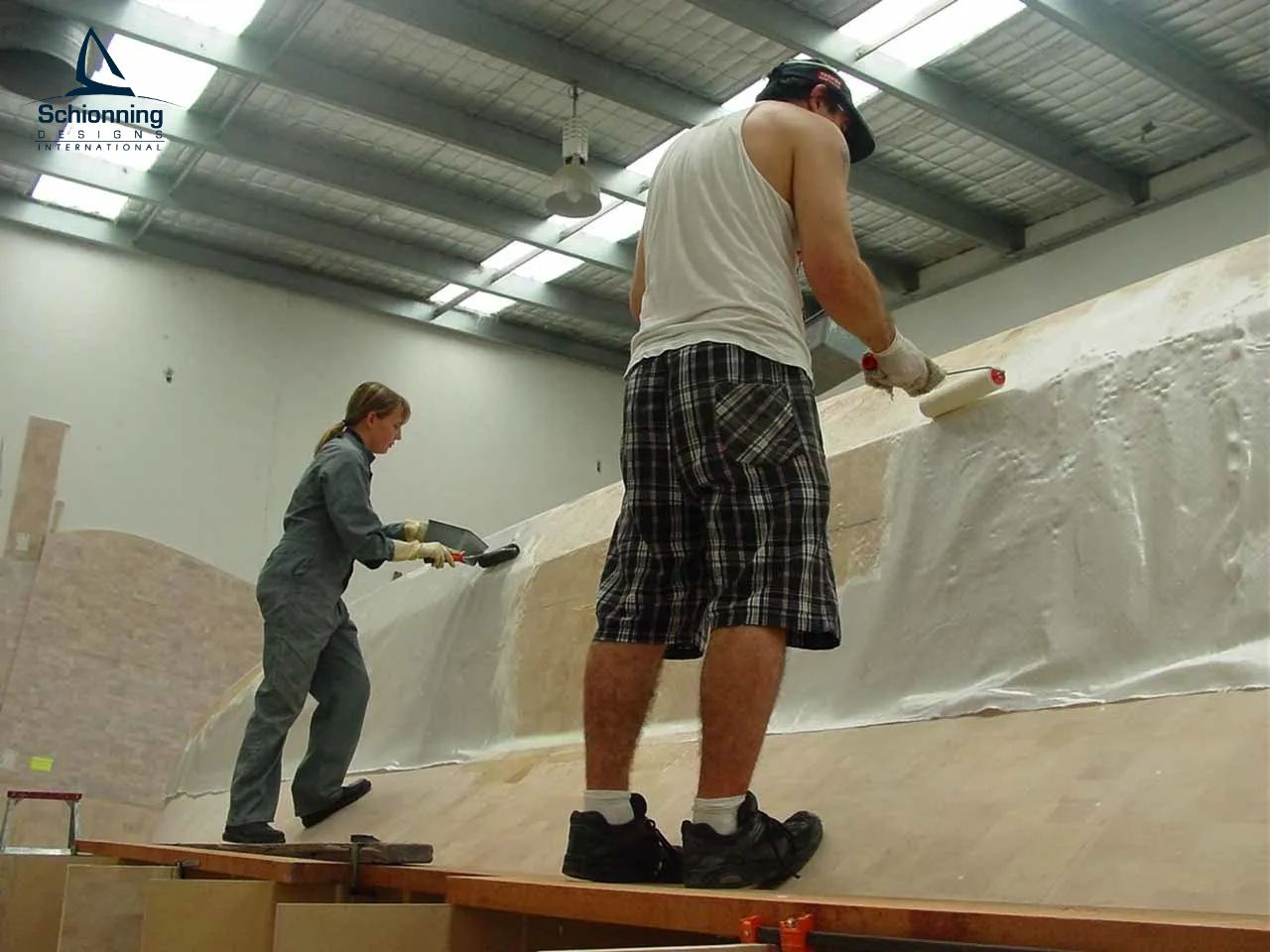
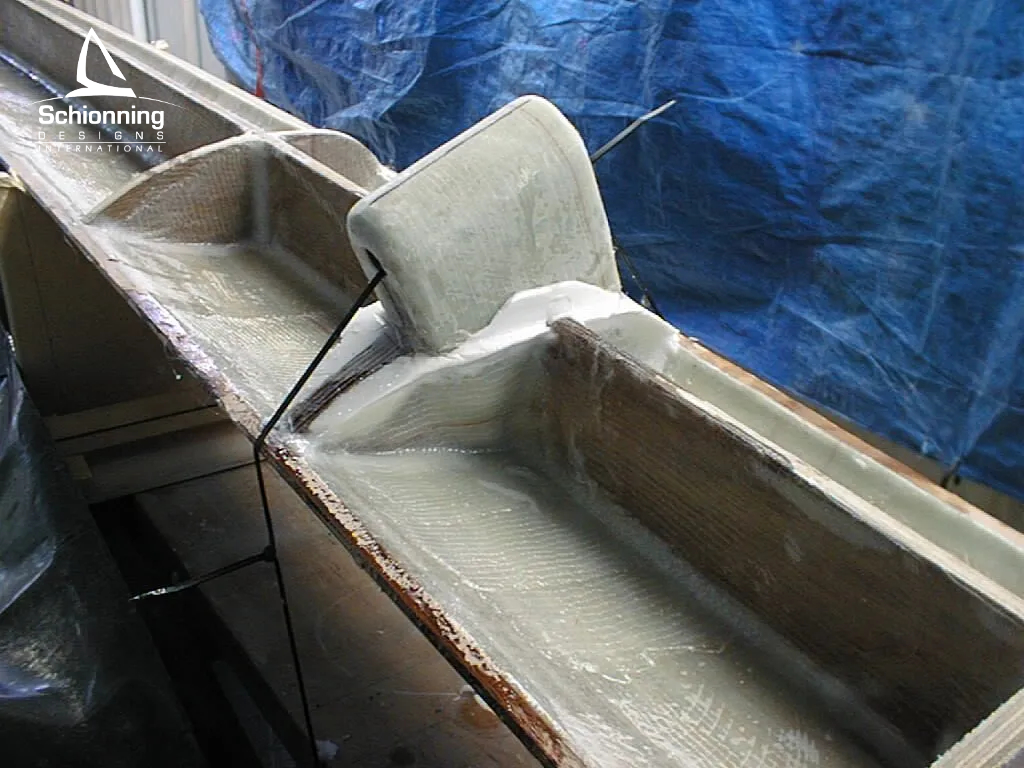
Here we can see the hull has now been taped and glassed, ready for turning soon. Once this has been completed the hull will need to be rolled over and the process repeated to produce the second hull. The use of flat panel construction techniques and the time-saving element of pre-cut kits really becomes noticeable. Having this head start is invaluable and could save almost 1000 hours on your build. (Wilderness 1100 design shown.)

STEP 4

The fairing is now complete, this is done using a filler compound mixed with our West System epoxy resin and applied to the surface of the hull. This process is to ensure that when painted the boat will have a smooth and glossy appearance, and as a general rule the more painstaking the paint-job and fit-out, the higher your resale value.

STEP 5

Now comes the turning of the hull! There are many different ways to do this, some involve cranes or complex equipment, however the smaller designs can simply be turned with a few extra pairs of hands, or a block/pulley set-up. Once both hulls are turned the tops of the bulkheads will be used to join the two hulls, and then the bridgedeck component will be installed underneath.

STEP 6

The hull now turned, the second must be positioned and aligned before the large bulkhead panels are used to fix these together. Once this is complete, she will start to look like a catamaran!

STEP 7

The forebeam is now installed along with the striker attachment fitting, as shown above. The bridgedeck is installed shortly after and taped onto the bulkheads with webs installed, this now completes what is a quite stiff and strong platform to work on.

STEP 8

Now that the bridgedeck is in place, the forward webs and dash will be fitted. At this stage, all furniture and internal work begins, with the main panels left off for ease of access when working.

STEP 9

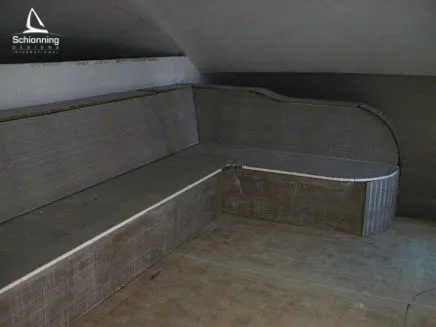
The internal furniture is now installed, if you chose Kit Option 2, this furniture will be pre-cut to your previously decided upon layout. If you chose to receive blank panels, this is the period in which your internal living areas are to be built. This construction uses paper-honeycomb Duflex panels, as these are superior in weight when used non-structurally. Cabin soles, engines and daggerboard cases are also now installed.

STEP 10

The transoms and cockpit area are now completed, along with the targa bar, if you’ve chosen this option.

STEP 11

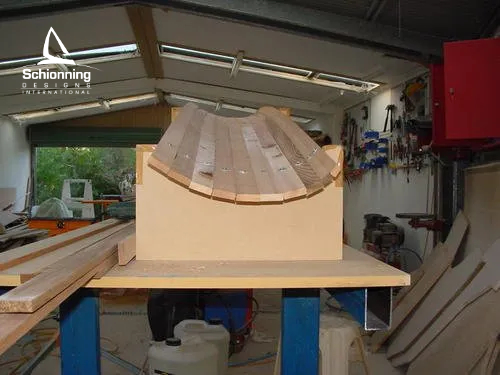
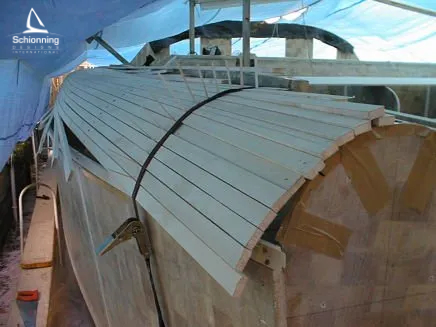
The next step is our hull-to-deck joins, side decks and close the shell. As you can see strip planking methods are used here to ensure a pleasing design to the eye. This technique is not difficult and the planks are once again glassed in place to ensure again stiffness and strength.

STEP 12

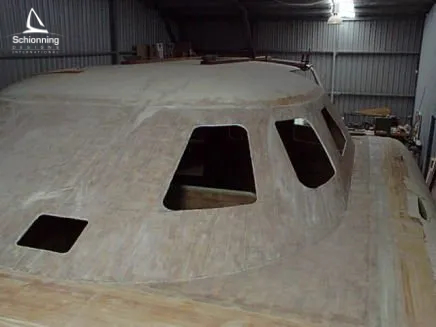
The cabin roof will have been built seperately from the boat, and dropped onto the bulkheads when needed. The cabin sides are then installed and we have a cabin. The next step is to carefully mark our window lines and get cutting.

STEP 13

Cutting of hatches, portlights and your saloon windows is now done, edges must be cored. Interior and exterior painting can now be completed after fairing.

STEP 14

Fairing is now completed and your final finish needs to be achieved. How extravagant you want to get with paint choices and decals is up to the owner and the project budget.

STEP 15

Fairing is finished up and the shell is ready for painting. This is as far as the Schionning kit will get you – from this point on the finishing touches, rig and deck hardware, equipment and appliances must be installed along with finishes such as carpet, roof linings etc. We can supply you with a rough sail away estimate based on other finished projects of a similar size when enquiring about a design, so don’t hesitate to email us if you’d like to investigate further, the build process can take a while to get your head around and we certainly understand that.

STEP 16

Once installation of major systems and finish has been completed the boat can be launched. Again this is something that should be planned beforehand however our designs can safely be loaded onto a flatbed semi-trailer sitting solely on their bridgedeck without any problems. So as long as you’re within a reasonable distance, a simple truck hire should be sufficient for your launch.

STEP 17

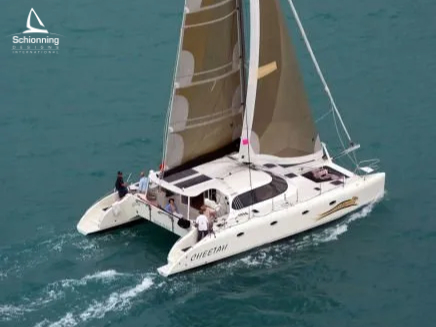
Once the mast is stepped, its time to go sailing!

THE LAUNCH

Building your own boat is a rewarding experience and you’ve built a valuable asset on which you can make a considerable profit. If you have any questions regarding build options or designs, please contact us by email, or via the contact page.
Posted on

Material Choices

Superlight Balsa - End-Grain Balsa - Foam - Paper Honeycomb - Western Red Cedar - SDI - End-Grain Balsa - 150kg per cubic metre Paper Honeycomb - 50kg per cubic metre Superlight Balsa - 94kg per cubic metre Western Red Cedar - 360-380kg per cubic metre - Foam

schionning Material Choices

solutions that work best for catamarans & why?

Our designs are based on cored composite construction techniques using West System epoxy resin and knitted fabrics. But given the range of today's composite technologies, which solution works best for catamarans and why? Written by Jeff Schionning

SELECTING THE CORRECT MATERIALS

Resin Choices for Catamaran Kit Building by Schionning Designs SDI - We choose ATL Composite's resin systems for their superior quality, reliability and value for money.We use West System epoxys for their high strength and adhesive values.

It also fully protects the boat against water absorption and it can not develop the dreaded Osmosis.

We choose ATL Composite’s resin systems for their superior quality, reliability and value for money.

Having worked closely with the ATL Composites team and their products for many years, we know we can stand by their material solutions, and rely on great service should something unexpected happen.

Colan brand cloths for their quality and low resin absorption - Schionning Designs SDI - We prefer Colan brand cloths for their quality and low resin absorption, custom made for Schionning Marine at six (6) stitches per square inch for easy wet-out and rounding corners.We prefer Colan brand cloths for their quality and low resin absorption, custom made for Schionning Marine at six (6) stitches per square inch for easy wet-out and rounding corners.

This may not seem important but when working with a material for an extended period of time, the small things make all the difference.

Superlight Balsa - End-Grain Balsa - Foam - Paper Honeycomb - Western Red Cedar - SDI - End-Grain Balsa - 150kg per cubic metre Paper Honeycomb - 50kg per cubic metre Superlight Balsa - 94kg per cubic metre Western Red Cedar - 360-380kg per cubic metre - FoamThe core choice is usually quite confusing. Cores have different capabilities and properties, and their benefits I feel are utilized fully in our catamaran designs. A quick look at their abilities:


  • End-Grain Balsa – 150kg per cubic metre
  • Superlight Balsa – 94kg per cubic metre
  • Western Red Cedar – 360-380kg per cubic metre
  • Foam – 80kg per cubic metre

Balsa has very good values and we can produce a shell using a very light laminate. It will be very stiff and very resilient to fatigue.

It has exceptional qualities including very high compression strength, extremely good sheer capabilities and fantastic sheer stiffness.

Compressive strength is the resistance to collapsing when pressure is applied perpendicular to the surface as when pushing directly onto the material with the point of your finger. Balsa is far stronger than Foam (80kg/cubic metre) in compression.

Balsa is also very strong in shear. This is when the core sample is held flat between your hands, one hand slid one way and the other slid the opposite way, when the core tears through the middle the core has failed in sheer. The amount of stretch you feel before the core shears is shear stiffness. To compensate for sheer weakness the core is made thicker. So 13mm Balsa may be equal in sheer to 19mm Foam.

(80 to 200 kg/m³)

There are many boats sailing that are built from foam as it’s mechanical properties are good for boat building.

  1. Initially one would expect this cat shell to be lighter as it is ½ the weight of Balsa. We do have to compensate for its weaknesses and will then add to the reinforcement the reinforcement on the outside to spread that compression load over more core and need a triaxial type weave to compensate for the veneer content that runs fore and aft on the Durakore.
  2. Secondly, we need to increase the Core thickness to compensate for the shear value, usually neutralizing the weight advantage.
  3. We only use structural foam core that is closed-cell and cross-linked.

The end result using foam core amounts to a very similar total boat weight. Professional builders can achieve a good result but usually use vacuum bagging and very good molds to achieve this.

Secondary Issues

Balsa can absorb water. It needs extreme neglect to rot (very unusual). Water soaks along the end grain quickly. It travels very slowly across the grain. We use balsa under the waterline especially because of it’s high compression strength for beaching etc. any core type must be sealed. Damage to all cores results in the same sort of repair. Notice a damp spot remaining when drying out to anti-foul… simply grind back the surface glass exposing the core, dry it out and re-glass – it’s that easy.

Timber cores are cheaper than Foam in most cases.

A light, high tech cat returns a far better (often 2 – 3 times) re-sale than lower tech materials. Often saving $10,000 on materials initially, loses $200,000 on re-sale – a serious reality.

Our boats can be built using Balsa, Foam or Western Red Cedar. Combine strength, stiffness, lightness and cost, with ease of use – it just makes good sense!

Posted on

‘WAHOO’ | G-Force 1400

WAHOO G-Force 1400 Accolade by Schionning Designs

'WAHOO' | Newport to Ensenada

G-Force 1400 'WAHOO' recently competed in the Newport to Ensenada International Yacht Race , and owner Bill Gibbs has written some words about the race and his journeys aboard 'WAHOO'.

WAHOO G-Force 1400 Accolade by Schionning Designs

WAHOO G-Force 1400 Accolade by Schionning Designs small“I’m a long time catamaran racer. A Nacra 5.8 in the mid 80’s. A 40’ Crowther cat from 1997-2000. And in 2001, Afterburner, a 52’ x 30’ Tennant racing cat, heavily modified by the previous owners from a Bladerunner design. She had a great NZ racing record. We imported her and raced her for 16 years. It was quite the hoot, flying a hull into the high 20’s regularly.  She had no center cabin, and would be described as wet and Spartan by most people. As an overpowered beast by others.

I turned 60 in 2014 and decided it was time to slow down some and get comfortable. I found Wahoo, a G-Force 1400 done in carbon, half finished in South Africa. It was love at first sight, the most beautiful boat I have ever seen. The builder (Julian of Current Marine) had wanted a fast boat for himself, when his circumstances changed and he put her on the market. I wanted a quick boat and used our local rating organization’s VPP to accurately predict Wahoo’s performance.

WAHOO G-Force 1400 Accolade by Schionning Designs - The TeamI got to specify the fit out and rigging. I went for a bit taller carbon mast at 20m, as wind in southern California is generally lighter than the Cape of Good Hope. We got a deal on shipping her to the British Virgin Islands. My friends and I spent most of 2015 bringing her back to Sothern California in a series of legs. It was quite the adventure with lots of boat repairs in exotic locations. Her fundamentals are sound. The design is great. Her construction is a bullet proof work of art. She sails great! We have pushed her hard without drama. (Who doesn’t have some issues with plumbing, electronics, fuel, and engines on a new boat?)

Our first race was the 180 boat 2016 Newport Beach to Ensenada (N2E) race, where we took first overall. It was a great way to start! This year we won first in our N2E multihull class, including a 125nm match race against a Gunboat 62 (which we beat boat-for-boat and on handicap). We finished in about half the time that it took the condomarans to complete the course. Locally, we are the fastest sailboat in our Ventura Harbor. 

I have to say that I love Wahoo as much now as when I bought her. Best choice I could have made. She has met my expectations perfectly. I never tire of the complements on her looks or her performance. Or the looks I get when I describe her as my slower, more comfortable boat.”

Bill Gibbs
Posted on

Documents & Info

Catamaran Kit Materials. What do I receive? Schionning Designs supply a list of the Kit Materials you will receive to start the process.

Documents & Information

Welcome to the area of our site in which we keep any documents, articles or information we think you'd like to peruse while making the decision regarding your dream multihull. Building a boat is not for everyone, but it is much easier than most people expect and can be a great investment. The Schionning team always advise thorough research on design and construction aspects before making a decision and we hope the following information can assist you.

Posted on

Media & Publications

Catamaran Kit Materials. What do I receive? Schionning Designs supply a list of the Kit Materials you will receive to start the process.

Schionnings in the Media

The Schionning Media page is a collection of news appearances, articles or magazine mentions and appearances that we think are worth sharing. The Schionning office houses a collection of multihull magazines dating back over 10 years - and we think this gives potential clients a good indication of our reputation within Australia and around the world.

ARTICLES

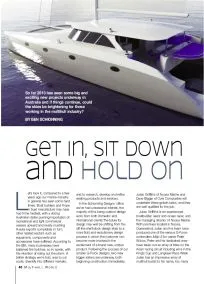
Get In, Sit Down and Hold On - Schionning DesignsAn article on the G-Force’s under construction and the development of a new custom design. Published in issue #120 of Multihull World Magazine.
VIEW ARTICLE…

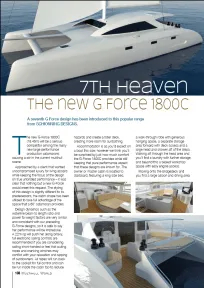
7th Heaven - The New G-FORCE 1800C - Schionning Designs International.jpgA write-up on the G-Force 1800C, the latest and largest G-Force from Schionning Designs. Published in issue #121 of Multihull World Magazine.

> VIEW ARTICLE

The Legend 60 Magazine Article by Schionning DesignsA short design write-up on the new Legend 60 design. Published in issue #121 of Multihull World Magazine.

>VIEW ARTICLE

The Arrow 1200 A design review in Multihull World magazine for the brand new Arrow 1200 design. This design is 100% flat panel construction and is a great budget option for those wanting to cruise the world.A design review in Multihull World magazine for the brand new Arrow 1200 design. This design is 100% flat panel construction and is a great budget option for those wanting to cruise the world.

>VIEW ARTICLE

New G-Force Cruise Range Schionning DesignsAn article from Multihull World Magazine about the introduction of the new G-Force Cruise range, that keep with the performance of their thoroughbred sisters but can carry those cruising extras!

>VIEW ARTICLE

Schionning Designs - Cosmos Catamaran Launch - D'Estree Bay Launching Story

A launching story from Multihull World Magazine about the Cosmos 1320 D’Estree Bay that was launched in 2013.

>VIEW ARTICLE

Schionning Designs Catamaran Launch - Time Lord Launching Story A launching story from Multihull World Magazine about the Wilderness 1030 A launching story from Multihull World Magazine about the Wilderness 1030 “Time Lord” that was launched in 2013.

> VIEW ARTICLE

Magazine
Cover Shots

Posted on

Construction

Catamaran Kit Materials. What do I receive? Schionning Designs supply a list of the Kit Materials you will receive to start the process.

Construction

This construction page will contain any new information that we believe is helpful to builders or anyone contemplating undertaking a build. Keep your eyes peeled for updates

G-Force 1500C
(CE Certified) Build

Paul de Preter and Jolanda van der Veen of Tri-Cat Sailing Holidays are building a G-Force 1500C - and are documenting their build meticulously.
Their chosen build method of female molding and vacuum infusion is not the recommended method for amateur construction, however it is an option and these regular video updates of the build are very helpful for gaining a greater understanding of vacuum infusion and how it is done.
Posted on

Catamaran Design Comparison

Catamaran Kit Materials. What do I receive? Schionning Designs supply a list of the Kit Materials you will receive to start the process.

Design Comparison Chart

It can be tempting to just think "what's one more metre?" however the addition of one metre of waterline length equates to an enormous increase in interior space and build hours, so choose something that suits your needs and budget most comfortably.

When budgeting rather allow a safety margin for any unexpected costs, as there are bound to be a few.

Choosing between designs, especially around a similar length can be tough. Our design comparison table is a helpful tool that lets you easily identify the small (but extremely important) differences between our design ranges and individual designs.

As always if you need personalized advice or would like to speak to someone to assist with your decision please email us.

Posted on

YouTube – TheSchionningTeam

Catamaran Kit Materials. What do I receive? Schionning Designs supply a list of the Kit Materials you will receive to start the process.

The Schionning Team

Youtube has opened the doors to a new world of video creating and sharing, and Schionning Designs has compiled a list of the best sailing, building or cruising videos and posted them below. More are added each week so keep checking back to see whats new!